Article


Staying strong through aging isn’t just about looking fit, it’s about preserving independence, mobility, and quality of life. Even highly active adults face a simple biological truth: the muscle stem cells (also known as progenitor cells) that repair and rebuild muscle naturally become less efficient with age.
Each time we exercise, carry groceries, climb stairs, or recover from even minor strains, these cells spring into action to repair microscopic damage and rebuild muscle fibers. Over time, they become less responsive, accumulate DNA damage, experience mitochondrial decline, and generate more oxidative stress. Together, these age-related changes make it increasingly difficult to maintain muscle mass, recover efficiently from physical activity, or bounce back after injury. Supporting the health and function of these cells is essential for preserving muscle strength, mobility, and overall vitality throughout the aging process.

A new study published in npj Aging examined how AstaReal® Astaxanthin affects human muscle progenitor cells (hMPCs), responsible for muscle repair and regeneration. The findings reveal meaningful benefits to supporting aging muscles.
Astaxanthin Helps Aging Muscle Cells Work Better
Astaxanthin appeared to help aging muscle cells function more effectively, with several statistically significant benefits.
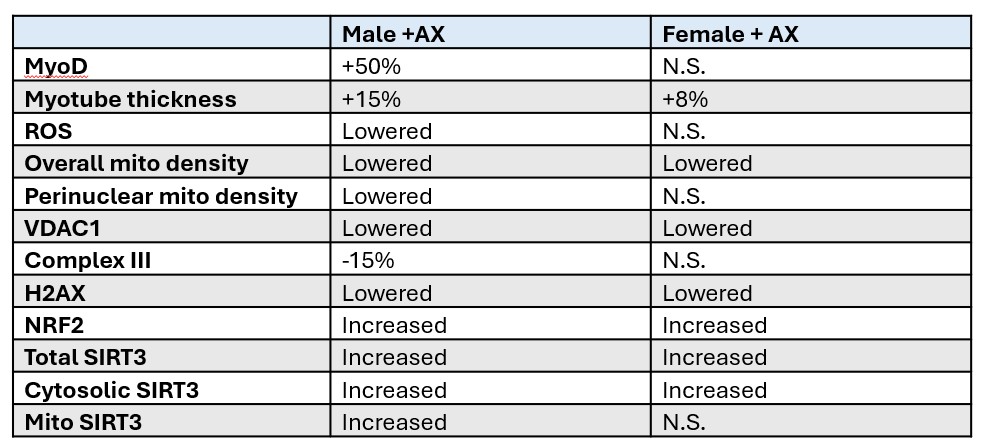
In the male cells, astaxanthin strengthened early muscle‑repair programming by increasing myoblast determination protein 1(MYOD) positive cells by about 50% (p = .02). When a cell becomes MYOD‑positive, it enters the muscle‑building pathway, signaling that it’s ready to begin repairing damaged fibers or forming new ones. Because MYOD is one of the earliest and most important markers of muscle regeneration, a higher number of MYOD‑positive cells indicates that the muscle repair system is activated and primed to rebuild tissue more effectively. These cells also later formed myotubes roughly 15% thicker than untreated controls (p = .04). Myotubes represent one of the first visible structural steps in building new muscle tissue. As they mature, they develop into fully functional muscle fibers capable of contracting and contributing to strength and movement. This enhanced priming may support better recovery after exercise, improve maintenance of muscle mass, and support more efficient repair after injury. The female cells did not show the same early activation boost; however, they still formed slightly larger myotubes (p = .03), suggesting a modest improvement in muscle fiber maturation.
Astaxanthin also produced several measurable improvements in mitochondrial health in the male cells. Mitochondria are the “power plants” of our cells generating the energy that muscles need to keep us moving. As we age, these power plants can become less efficient and produce more oxidative stress, which contributes to fatigue, slower recovery, and overall declines in muscle performance. Astaxanthin significantly reduced mitochondrial oxidative stress (p = .0002), by about 15%. It also reduced a protein (VDAC1) in male cells (p=.008); a marker of impaired mitochondrial metabolism that tends to be elevated in aged muscle. Together, these changes suggest that the mitochondria in the astaxanthin treated aging male muscle cells functioned more efficiently in producing energy. Healthier mitochondria mean better energy production, less cellular stress, and potentially stronger, more resilient muscles. These improvements could translate into greater ability to maintain muscle function with age.
II. Reduced DNA Damage
Both male and female cells experienced meaningful reductions in H2AX, a marker of nuclear DNA damage. This result is important for aging adults because DNA damage naturally builds up over time. As this DNA damage accumulates, cells become less efficient, slower to repair themselves, and more prone to dysfunction. In muscle tissue, that can translate into slower recovery after activity, reduced strength, and a greater tendency toward fatigue or injury.
The study’s finding that astaxanthin lowered H2AX in muscle cells from both men and women suggests that it may help reduce the burden of DNA damage in aging muscle cells. In practical terms, fewer DNA breaks mean healthier cells, better repair capacity, and potentially more resilient muscle function as we age.
III. Activated the NRF2-SIRT3 Pathway
The NRF2 pathway is the body’s “cellular defense switch.” When activated, it turns on a wide range of antioxidant and detoxification genes that help cells protect themselves from stress, pollution, inflammation, and everyday wear and tear.
The SIRT3 pathway is a protein that works inside mitochondria. It helps keep these energy centers efficient, stable, and protected from oxidative damage. Mitochondria are the power plants, SIRT3 is the maintenance crew that keeps them running smoothly.
Together, the NRF2–SIRT3 pathway forms one of the body’s most important anti‑aging defense systems. When this pathway is active, cells are better equipped to handle stress, repair damage, and produce clean, reliable energy. Astaxanthin activated this pathway in both the male and female muscle cells. Even though men showed stronger mitochondrial improvements, both sexes experienced activation of these key resilience pathways. For an aging person, this could translate into better cellular protection, improved energy production, and stronger muscle recovery. All factors that directly influence mobility, strength, and overall vitality throughout the lifespan.

Understanding the Sex‑Specific Cellular Responses to Astaxanthin
Although astaxanthin produced beneficial effects in both male and female muscle cells, the magnitude of certain outcomes, like increased myotube thickness, varied between the sexes. Moreover, sex‑specific differences in mitochondrial markers indicate that the underlying mechanisms of action are not identical. Baseline divergence in the Nrf2–Sirt3 signaling pathways between male and female models have been previously observed and may contribute to these distinct responses to astaxanthin. Studies incorporating estrogenic systems could help clarify the biological basis and functional significance of these sex‑dependent effects.
Below is a comparative summary of the effects with astaxanthin treatment in male and female aged hMPCs, where N.S. represents non-significant findings.
Astaxanthin in Muscle Support Formulations
As the active‑aging market continues to grow, consumers are seeking ingredients that do more than offer generic antioxidant support. They want targeted, mechanistic solutions that help them stay strong, mobile, and independent. By enhancing early muscle‑repair signaling, improving myotube formation, reducing DNA damage, and restoring mitochondrial efficiency, this study showed that astaxanthin may target the cellular mechanisms that drive age‑related muscle decline. Astaxanthin showed support for potential causes of muscle decline that many older adults experience. For formulators looking to build the next generation of active aging products, incorporating astaxanthin provides a strategic advantage in meeting the real biological needs of an aging population.
